 Bag ◯
Bag ◯


Which Uggu Should I Choose for My Baby?
A Complete Age-Wise Guide for Parents
One of the most common questions parents ask us is:
"Which Uggu is suitable for my baby?"
As babies grow, their nutritional needs, chewing abilities, digestion, and food acceptance change rapidly. Choosing the right stage of Uggu can help make the transition to solids smoother while ensuring your little one receives age-appropriate nourishment.
In this guide, we'll explain the different Uggu stages, how to choose the right one for your baby, signs that your baby is ready for the next stage, and common mistakes to avoid.
What is Uggu?
Uggu is a traditional baby food that has been lovingly prepared in Indian households for generations. It is often one of the first complementary foods introduced after six months when babies begin their journey beyond breast milk.
At Nutreat, Uggu is handcrafted using our signature process of sprouting, sun-drying, slow roasting, and stone grinding to preserve the natural goodness of ingredients while making them easier to digest.
If you are new to Uggu, read our detailed guide: "What is Uggu?"
Why Does Uggu Have Different Stages?
Many parents assume that one baby cereal is suitable throughout infancy.
In reality, babies develop rapidly between 6 months and 2 years.
As they grow:
- Their digestive system matures.
- Their calorie requirements increase.
- Their chewing skills improve.
- Their taste preferences expand.
- Their nutrient requirements change.
Different Uggu stages are designed to support these developmental milestones.
Uggu by Baby Age
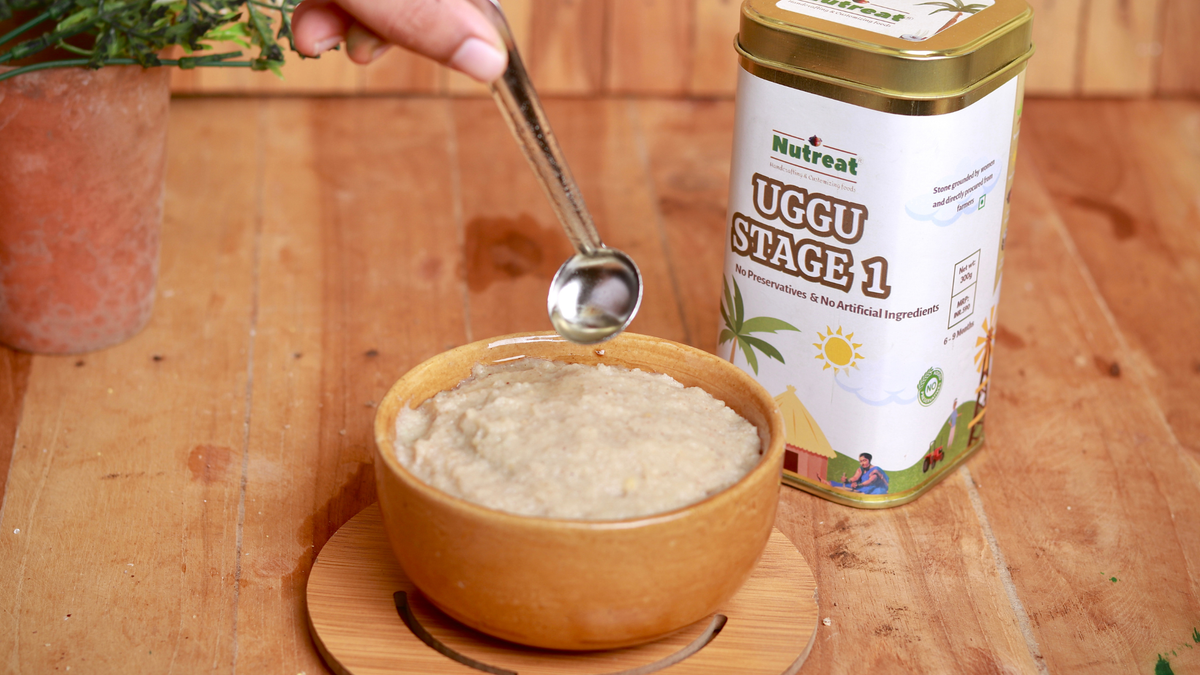
6 to 8 Months: Uggu Stage 1
This stage is ideal for babies who are just beginning solids.
Characteristics:
- Fine texture
- Easy digestion
- Gentle introduction of grains to complementary feeding
- Suitable for babies learning to swallow semi-solid foods
Signs your baby is ready:
- Can sit with support
- Shows interest in food
- Opens mouth when food is offered
- Has good head control
Recommended Product: Nutreat Uggu Stage 1

8 to 12 Months: Uggu Stage 2
As babies become comfortable with solids, they require slightly more variety and texture.
Characteristics:
- Supports growing nutritional needs
- Texture is bit coarser
- Suitable for babies eating multiple meals daily
- Encourages acceptance of different tastes
Signs your baby is ready:
- Finishes Stage 1 comfortably
- Accepts thicker textures
- Eats 2–3 meals per day
- Shows increased appetite
Recommended Product: Nutreat Uggu Stage 2

12 Months and Above
Toddlers require more diverse nutrition to support rapid growth and activity.
Characteristics:
- Higher variety
- More texture
- Suitable for independent eating habits
- Complements family foods
Parents can gradually expand beyond baby cereals while continuing nutrient-dense traditional foods.

Quick Uggu Recommendation Table
| Baby Age | Recommended Uggu Stage | Feeding Texture |
|---|---|---|
| 6–8 months | Uggu Stage 1 | Thin and smooth |
| 8–10 months | Uggu Stage 2 | Slightly thicker |
| 10–12 months | Uggu Stage 3 or more | Thick porridge consistency |
| 12+ months | Advanced traditional foods | Textured and varied |
Signs Your Baby Is Ready for the Next Stage
Every baby develops at a different pace.
Instead of focusing only on age, look for these signs:
Improved Chewing Skills
Your baby begins moving food around the mouth rather than simply swallowing.
Increased Appetite
The current quantity no longer seems satisfying.
Interest in Family Foods
Babies become curious about what others are eating.
Better Sitting Balance
Improved posture often supports progression to thicker textures.
Common Mistakes Parents Make While Choosing Uggu
Moving to the Next Stage Too Quickly
Babies need time to adjust to new textures.
Comparing Your Baby with Other Babies
Developmental timelines vary significantly.
Offering Large Quantities Initially
Start small and gradually increase.
Ignoring Hunger and Fullness Cues
Responsive feeding helps establish healthy eating habits.
Expecting Immediate Acceptance
New foods may require multiple exposures before babies become comfortable with them.

Frequently Asked Questions
Can I start Uggu before six months?
Exclusive breastfeeding is generally recommended until six months. Consult your pediatrician before introducing complementary foods.
Can Uggu be given daily?
Yes, Uggu can be part of a baby's regular complementary feeding routine when offered as part of a balanced diet.
What if my baby refuses Uggu?
Babies may need repeated exposure to new foods. Try again after a few days and maintain a calm feeding environment.
How do I know if I should move to the next Uggu stage?
Look for developmental readiness signs such as improved chewing ability, increased appetite, and comfort with current textures.
Small founder note
Written by Jyothi Sri Pappu, Founder of Nutreat. Inspired by her personal journey of introducing traditional foods to her son and years of working with families across India.
Still Unsure Which Uggu Is Right for Your Baby?
Every baby is unique.
At Nutreat, we have helped thousands of families choose foods based on age, growth stage, food preferences, and individual needs.
If you're unsure whether your baby should start with Uggu Stage 1 or move to the next stage, our team can guide you.
Contact Team Nutreat for personalized recommendations based on your baby's age and feeding journey.
Final Thoughts
Choosing the right Uggu stage does not have to be confusing.
The best approach is to follow your baby's developmental cues while providing age-appropriate nutrition through traditional foods prepared with care.
Start with the stage that matches your baby's current feeding abilities, progress gradually, and remember that every child grows at their own pace.
With the right support, Uggu can become a nourishing part of your baby's food journey.
Wisdom was never
one fixed recipe.
Continue exploring the food intelligence behind India’s traditional kitchens.
Explore the journal ↗