 Bag ◯
Bag ◯


A Mother's Notes on Uggu (FAQs)
Questions I Once Asked for My Own Child
There are some foods that nourish the body.
And then there are foods that nourish memories.
For me, Uggu belongs to the second category.
I still remember the day my son completed his sixth month. As a first-time mother, I was both excited and nervous. Every spoon of food I introduced felt like a responsibility. I had a hundred questions in my mind.

Should I start solids now?
What should be his first food?
Will his tiny tummy digest it well?
That was when my grandmother gently said,
"Start with Uggu. Generations of children have grown with it."
That single sentence became the beginning of a journey—not just for my son, but eventually for Nutreat itself.
Today, after helping thousands of parents with customized foods, I still return to that moment with gratitude.
And I still hear the same questions that I once asked.
So I thought of answering them here, not just as a founder, but as a mother.
What Exactly Is Uggu?
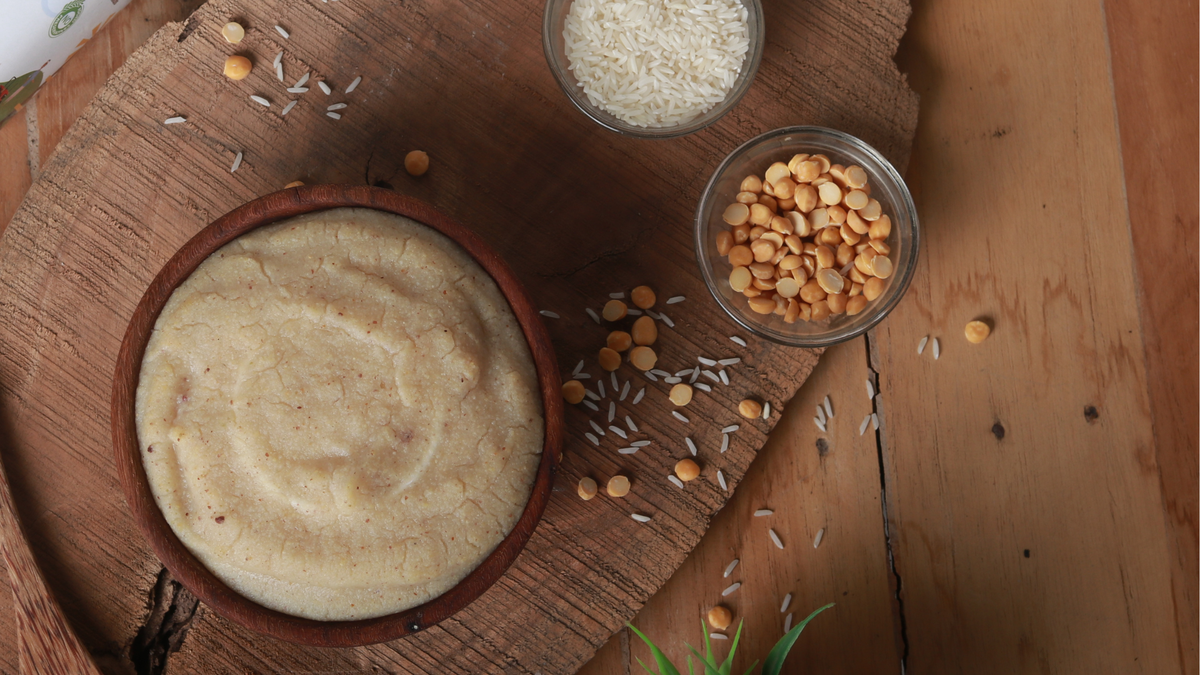
Uggu is a traditional baby food prepared in many Indian homes when babies begin complementary feeding.
But there is something beautiful about Uggu.
There is no single Uggu recipe.
Every family prepares it differently.
Every region carries its own wisdom.
In Andhra homes, ingredients may differ from Telangana.
Some families include millets.
Some use rice and pulses.
Some prefer sprouted ingredients.
Some recipes are handed down through grandmothers who never wrote anything down, yet knew exactly what a growing baby needed.
That is the beauty of traditional foods.
They are living traditions.
Why Are There So Many Uggu Recipes?
This is one of the questions parents ask me most often.
The answer lies in something we now call the food matrix.
The food matrix refers to how nutrients naturally exist together inside foods—the structure, the combinations, and the interactions that influence digestion and nourishment.
Traditional recipes evolved around this understanding, even before science gave it a name.
Families used ingredients that:
-
Grew locally
-
Suited the climate
-
Matched seasonal availability
-
Supported digestion
-
Were familiar to generations
This is why regional traditional foods are important.
Food is not just nutrition.
Food is geography.
Food is culture.
Food is memory.
And sometimes, the foods closest to our roots are also the foods our bodies recognize best.
When Can I Start Uggu for My Baby?
Most parents ask:
"Can I start Uggu at six months?"
This was my first question too.
Complementary feeding is generally introduced around six months, while continuing breastfeeding according to individual needs and medical guidance.
When my son turned six months, we began with tiny quantities.
Not because I was worried about the recipe.
But because I was learning to trust myself as a mother.
And slowly, spoon by spoon, Uggu became part of our daily rhythm.
Which Uggu Is Best for My Baby?
There is no universal answer.
The right Uggu depends on:
-
Baby's age
-
Digestive readiness
-
Ingredients used
-
Family traditions
-
Feeding preferences
That is why I strongly believe parents should choose foods thoughtfully rather than simply following trends.
If you are confused, I have written a complete guide Which Uggu Should I Choose for My Baby? This guide explains age-wise recommendations and how to choose the right stage.
Can Uggu Be Given Every Day?
Parents often ask me this.
My answer is simple:
Variety matters.
Traditional food wisdom has always encouraged diversity.
No single food carries everything.
Uggu can certainly be part of a baby's regular diet, but babies also benefit from experiencing different grains, pulses, fruits, vegetables and textures as they grow.
The goal is not perfection.
The goal is nourishment with balance.
Does Uggu Help Healthy Weight Gain?
I smile whenever I hear this question because I remember asking it too.
Healthy growth is influenced by many factors:
-
Genetics
-
Overall diet
-
Feeding patterns
-
Sleep
-
Physical development
Traditional foods like Uggu are valued because they provide wholesome nourishment using thoughtfully chosen ingredients.
But every child grows differently.
And that is perfectly okay.
What If My Baby Refuses Uggu?
Please don't panic.
I say this as a mother.
Babies reject foods.
Babies spit food.
Babies surprise us.
Sometimes the same food they refuse today becomes their favorite after a week.
Patience is also part of feeding.
And perhaps that is the lesson motherhood teaches us repeatedly.
Why I Still Believe in Traditional Foods
Years have passed since my grandmother first placed that bowl of Uggu before me.
Since then, I have met thousands of mothers.
Different cities.
Different languages.
Different family traditions.
But one thing remains the same.
Every parent wants food that is gentle.
Wholesome.
Prepared with care.
Food that carries love from one generation to another.
That is why I continue to believe in traditional foods.
Not because they are old.
But because they have quietly stood the test of generations.
And every time I prepare Uggu, I still remember that young mother I once was—standing beside her grandmother, holding a tiny bowl, hoping she was doing the right thing.
Perhaps many of you are standing in that place today.
And if this note reassures even one parent, I think my grandmother would smile.
Wisdom was never
one fixed recipe.
Continue exploring the food intelligence behind India’s traditional kitchens.
Explore the journal ↗