 Bag ◯
Bag ◯


What is Uggu? Benefits, Recipe & When to Start – Nutreatlife
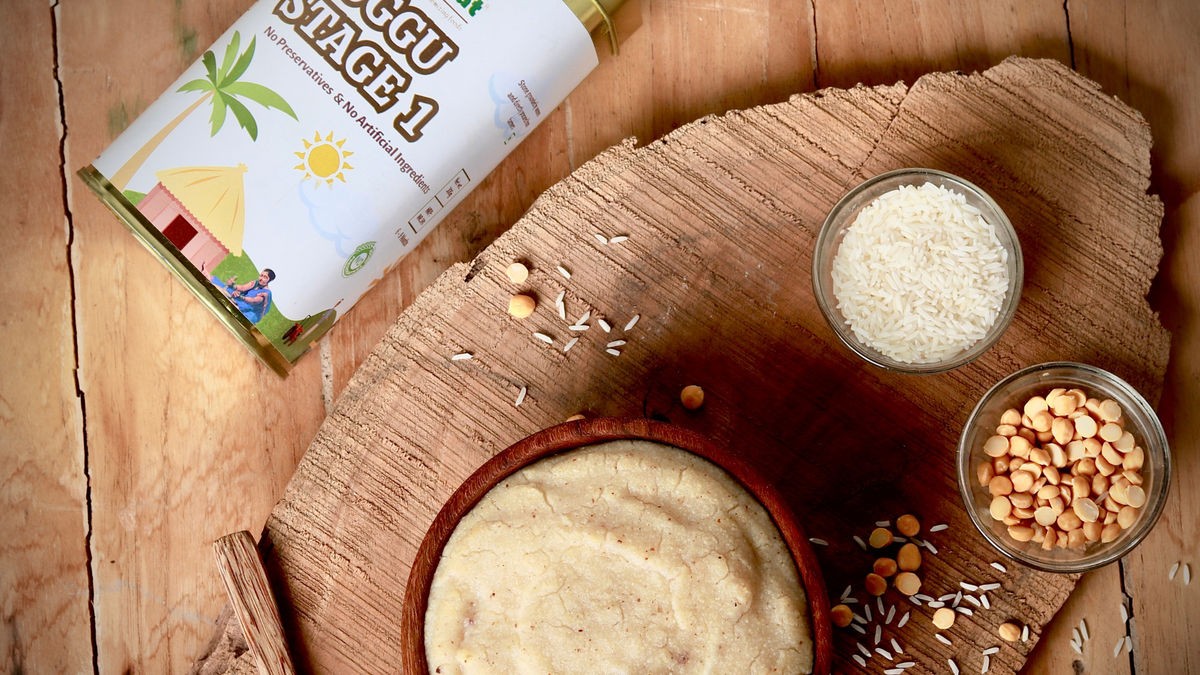
When it comes to a baby's first food, every parent asks the same question:
"What is the safest, healthiest, and most natural food I can give my baby?"
In many South Indian homes — especially Telugu households — the answer has been the same for generations:
Uggu.
But today, many young parents are rediscovering this traditional food and asking:
- What exactly is uggu?
- Is uggu better than packaged baby food?
- When can I start uggu for my baby?
- How do I prepare it safely?
This guide answers everything — combining traditional wisdom and modern nutritional understanding.
What is Uggu?
Uggu is a traditional South Indian baby food made from a carefully prepared multigrain powder, typically including:
- Rice (or parboiled rice)
- Moong dal
- Sometimes millets (ragi, jowar)
- Optional nuts (for older babies)
The grains are:
👉 Cleaned
👉 Sprouted (in some traditions)
👉 Sun-dried
👉 Slow roasted
👉 Ground into a fine powder
This powder is then cooked into a smooth, easily digestible porridge, making it ideal as a baby's first solid food after 6 months.
Looking for traditionally prepared Uggu for babies 6+ months? Explore Nutreat Uggu Stage 1.

Why Uggu Has Been Trusted for Generations
Uggu is not just food — it is a carefully designed nutritional system.
Traditional practices ensured that:
- Grains were pre-processed for digestion
- Food was freshly prepared
- Ingredients were locally sourced
- Texture was customized to the baby's age
Unlike modern one-size-fits-all foods, uggu was always:
Adapted to the baby — not the market
Nutritional Benefits of Uggu for Babies
1️⃣ Easy Digestion (Perfect First Food)
Moong dal and properly roasted grains make uggu:
- Light on the stomach
- Easy to absorb
- Ideal for developing digestive systems
2️⃣ Supports Healthy Weight Gain
Uggu provides:
- Balanced carbohydrates
- Plant protein
- Natural fats (if added)
This supports steady, healthy weight gain, not artificial fat accumulation.
3️⃣ Improves Gut Health
When prepared traditionally (sprouted + roasted):
- Reduces anti-nutrients
- Enhances mineral absorption
- Supports gut microbiome
4️⃣ Builds Immunity Naturally
Whole grains + pulses provide:
- Iron
- Zinc
- B vitamins
These nutrients are essential for immune development in infants.
5️⃣ No Preservatives, No Additives
Unlike packaged foods, uggu is:
- Fresh
- Chemical-free
- Free from added sugar, salt, or stabilizers
When to Start Uggu for Babies
Ideal age: 6 months+
This is when:
- Baby's digestive system matures
- Tongue-thrust reflex reduces
- Baby shows interest in food
Age-wise Uggu Consistency Guide
6–7 months
- Very thin, smooth liquid
- No lumps
- 1–2 spoons → gradually increase
7–9 months
- Slightly thicker porridge
- Introduce variety (millets) — try Uggu Stage 2 at this stage
9–12 months
- Thicker texture
- Add mild flavours (ghee, vegetables)
How to Prepare Uggu (Step-by-Step)
Ingredients (Basic Version)
- 1 cup aged rice
- ½ cup moong dal

Preparation Process
- Clean and wash ingredients
- (Optional) Soak and sprout
- Sun dry completely
- Dry roast until aromatic
- Grind into fine powder
- Store in airtight container
Cooking Uggu
- Take 1 tbsp powder
- Add water (no lumps)
- Cook on low flame
- Stir continuously
- Cool before feeding
⚠️ Common Mistakes Parents Make
- Making it too thick for beginners
- Not roasting properly → causes gas
- Adding sugar too early
- Using unclean or poorly stored grains
- Not sprouting the possible grains
Homemade vs Store-Bought Uggu
Homemade:
✔ Fresh
✔ Customizable
✔ No additives
Store-bought:
✔ Convenient
❗ Quality depends on processing
👉 The best option is:
Traditionally processed, clean, small-batch handcrafted uggu
Why Traditional Preparation Matters
The real power of uggu lies in:
- Sprouting → increases nutrient availability
- Sun drying → preserves natural enzymes
- Slow roasting → improves digestibility
- Stone grinding → retains nutrients
Without these steps, uggu becomes just another powder. Also check what's the difference between commercial baby cereals & Uggu
Uggu vs Commercial Baby Cereals
| Factor | Uggu | Commercial Cereals |
|---|---|---|
| Traditional preparation | Yes | Usually No |
| Customizable | Yes | Limited |
| Made on Order | Yes | No |
| Sprouting possible | Yes | Varies |
Browse our full range of handcrafted baby cereals →
Age-wise recommendation (In depth- Read Here)
| Baby Age | Recommendation |
|---|---|
| 6–8 months | Uggu Stage 1 |
| 9–12 months | Uggu Stage 2 |
| 12+ months | Uggu Stage 3 & More options |
A Note for Modern Parents
Parenting today comes with:
- Less time
- More confusion
- Too many choices
But some answers have always been simple. If you have some or want to know the most frequently asked questions here are they
Uggu is more than a recipe — it is a story passed down through generations. Curious about who decided what uggu is and how this tradition took shape? We explored that question in depth — and the answer might surprise you.
Wisdom was never
one fixed recipe.
Continue exploring the food intelligence behind India’s traditional kitchens.
Explore the journal ↗