 Bag ◯
Bag ◯


The Need to Choose the Right Food
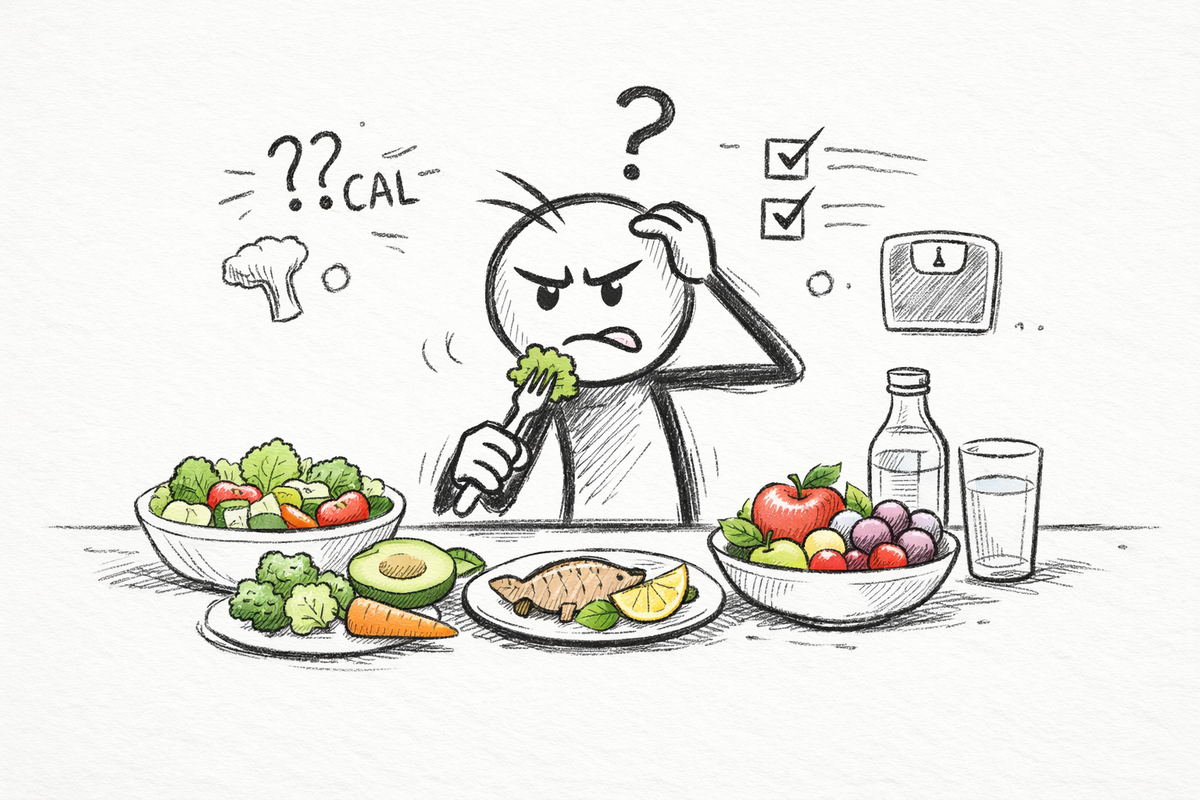
Why “Healthy Food” Is Not the Same for Everyone
1.1 – Why should I choose food consciously?
Before we discuss what good food is, let us first understand what happens when we don’t choose food consciously.
Assume you eat three meals a day.
You choose what’s easily available, socially popular, or marketed as “healthy”.
You feel full. You feel normal. Nothing seems wrong.
But beneath the surface, something important is happening.
Your body is not just digesting food —
it is adapting, compensating, and sometimes silently struggling.
Just like money kept idle loses value due to inflation,
food chosen blindly loses value inside the body.
Let’s make a few simple assumptions:
-
You eat the same “healthy” foods everyone recommends
-
Your digestion, hormones, and metabolism are different from others
-
Your lifestyle, stress, sleep, and age keep changing
-
Your food choices don’t change with these variables
-
You assume “if it works for many, it should work for me”
At first, everything looks fine.
But over years, small mismatches compound.
-
Bloating becomes normal
-
Fatigue becomes routine
-
Skin issues become chronic
-
Immunity fluctuates
-
Weight becomes unpredictable
Nothing dramatic. Just slow erosion.
This is not because food is bad.
It’s because food is mismatched.
1.2 – The “Inflation” of Nutrition: Why food value erodes over time
In finance, inflation reduces purchasing power.
In nutrition, digestive capacity reduces nutrient absorption.
Two people can eat the same food:
-
One absorbs 80%
-
Another absorbs 30%
The food is identical.
The body is not.
Factors that reduce “nutrient returns”:
-
Poor gut health
-
Wrong food timing
-
Improper combinations
-
Overprocessing
-
Lack of bioavailability
If food is not chosen for your system,
your body pays the price later — just like retirement without investing.
1.3 – Why “superfoods” don’t work for everyone
Quinoa, oats, salads, smoothies, protein powders —
they are not inherently good or bad.
They are tools.
Just like equities are great — but not for someone who cannot handle volatility.
Examples:
-
Raw salads may improve digestion for some, worsen it for others
-
High-protein foods may build strength in one body, strain kidneys in another
-
Millets may regulate sugar for some, cause bloating for others
Food has risk and return, just like investments.
Higher nutrition ≠ better outcome
Wrong match = loss
1.4 – Understanding food “asset classes”
Think of food like asset classes — each with different properties.
Easily Digestible Foods (Low Risk)
-
Rice, well-cooked grains, porridges
-
Ideal during recovery, pregnancy, infancy, illness
High-Nutrition Foods (High Return, Medium Risk)
-
Sprouts, millets, legumes
-
Require good digestion and correct preparation
Heavy Foods (High Risk if misused)
-
Excess dairy, fried foods, refined sugars
-
May feel comforting but strain metabolism long-term
Functional Foods (Targeted Use)
-
Spices, herbs, fermented foods
-
Powerful when used correctly, harmful when overused
A balanced plate — like a balanced portfolio — matters.
1.5 – Why personalization is non-negotiable
Your food needs change with:
-
Age
-
Life stage (pregnancy, lactation, aging)
-
Activity level
-
Stress
-
Climate
-
Gut health
Eating the same food at 6 months, 6 years, 26 years, and 60 years
is like investing the same way throughout life.
It doesn’t work.
Traditional food systems understood this.
Modern diets often ignore it.
1.6 – What choosing the right food really means
Choosing the right food is not about:
❌ Trends
❌ Calories alone
❌ Labels
❌ Influencers
It is about:
✔ Digestibility
✔ Bioavailability
✔ Preparation method
✔ Timing
✔ Compatibility with your body
Food that suits you:
-
Gives sustained energy
-
Improves digestion
-
Reduces cravings
-
Enhances immunity
-
Supports long-term health
Key takeaway
Just as wealth is built by choosing the right investments,
health is built by choosing the right food.
Not more food.
Not trendier food.
But food that truly suits you.
Next
Wisdom was never
one fixed recipe.
Continue exploring the food intelligence behind India’s traditional kitchens.
Explore the journal ↗